

Trisha Angeles Turns Grief Into Movement in "Let it Leave Me"
Produced by Toyshop, the six-minute narrative dance film transforms the day Angeles lost her partner into five acts of survival, before extending the work into a Los Angeles gathering around grief, art and community.
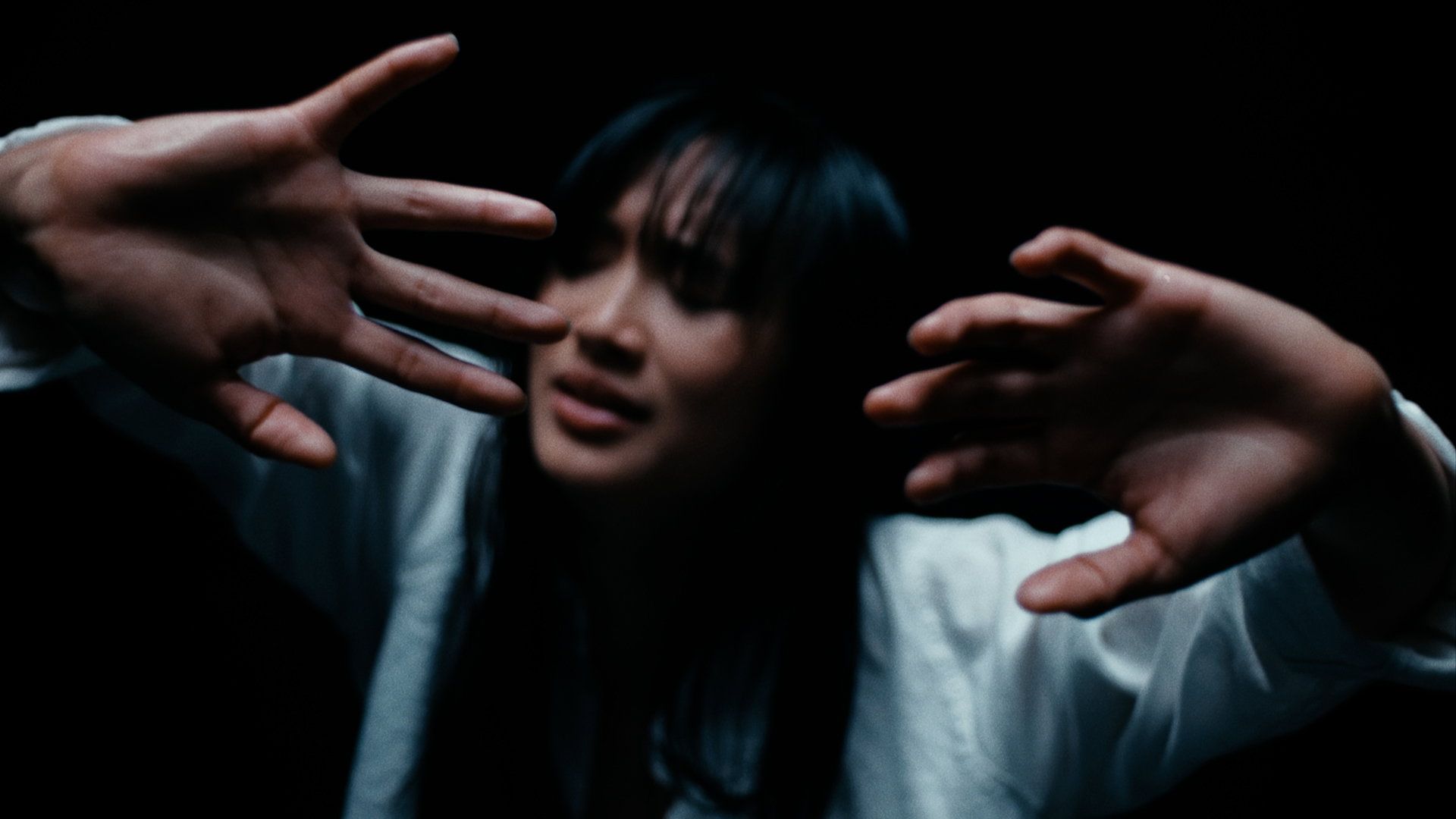
Creative studio Toyshop has released Let it Leave Me, a six-minute narrative dance film by Creative Director, Art Director and Photographer Trisha Angeles that gives physical form to sudden loss through movement, music, sound and image.
Angeles has spent more than a decade creating global campaigns and visual stories across brands, music and publishing. In Let it Leave Me, she turns that visual practice inward, directing a deeply personal work rooted in the murder of her life partner, Paul Knox, in 2023.
Rather than recreate the events literally, Angeles translates the emotional reality of that day into five acts of survival: The Morning, The Search, The Hospital, The Nightmare and The Goodbye. Each movement represents a different physical and psychological state, using dance as a language for experiences that Angeles found impossible to adequately express in words.
The idea began in conversation with producer Nico Carbonaro, Partner and Head of Creative at Toyshop and a close friend of Angeles, who helped her work through what form the story might take.
“About six months after her partner was killed, Trisha told me she knew she needed to create something to process the trauma that was now trapped in her body,” says Carbonaro. “She was wary of anything that felt like a scripted recreation, and wanted to go deeper – to explore the feelings she now lived with that no words can do justice to.”
That decision became fundamental to the film. Instead of dramatizing the day through dialogue and conventional scenes, Angeles developed a visual framework in which memory could be expressed through movement, rhythm, framing and sound. Her original treatment approached the project as a way of reconnecting a nervous system severed through trauma, externalizing an experience that had remained physically lodged in the body.
Angeles conceived Let it Leave Me as an almost unbroken passage through the worst day of her life, with the camera staying closely tethered to dancer and choreographer Hope Spears as she embodies its emotional shifts.
The Morning begins in warmth and intimacy, conceived from Paul’s perspective as Spears wakes beside his stand-in and moves through the familiar gestures of an ordinary day. That routine is ruptured by the news that he is missing. The Search moves into mounting panic, where fear exists alongside the hope that Paul might still be found safely.
By The Hospital, the world has narrowed further. Spears moves through a boundless space beneath a beam of light, which Angeles imagined as a world suspended between reality and the fleeting presence of Paul’s spirit: a place with no answers or end. The nightmare propels the body through an endless landscape of fear, helplessness and shock, before The Goodbye returns the film towards stillness. Its final movement deliberately echoes the intimacy of the opening, but everything those gestures signify has changed.
Angeles’ original treatment mapped these transitions through camera movement, lighting, sound and physical performance from the outset. Rather than recreating every location literally, the film uses a vast, stripped-back space in which shifts in light and movement become markers of time, place and memory. The result is less a reconstruction of events than an attempt to recreate their internal pressure.
Working with cinematographer Keenan Newman, Angeles built the visual progression around changing proximity and space. Warm imagery gradually gives way to isolated beams of light, cooler tones and increasingly exposed close-ups, while wider frames leave Spears alone within the darkness. The camera itself moves from quiet observation into more urgent orbiting movement before gradually returning to restraint.
“Turning grief into art is a bold pursuit that requires a very vulnerable leap of faith. Trisha Angeles took this leap and inspired us all to join her,” says Newman. “She led this work with so much love and courage - I am deeply grateful for the chance to learn alongside Trisha's leadership and so proud of what our team created.”
That same principle informed the choreography. Spears worked closely with Angeles to develop a physical vocabulary from the storyboard, music and emotional architecture of the five acts, rather than attempting to recreate Angeles’ actions literally.
Spears both choreographed and performs the film, becoming the physical conduit for Angeles’ memories rather than portraying her as a conventional character. Her movement carries the sensations Angeles wanted to externalize: control giving way to panic, the body trying to continue functioning after devastating information, dissociation, collapse, tenderness and eventual release.
“When I first saw the story board that Trisha had laid out, it moved me to tears. She was so open and generous with her experience that it made choreographing and embodying all those emotions almost easy, for lack of a better word,” says Spears. “Trisha’s story is unique but the emotions are shared across the human experience. I hope this film is also a reminder that we are never alone in our grief.”
Music was the starting point for Let it Leave Me, preceding both the finished choreography and imagery. Working with composer Jon Chau, Angeles developed a score that follows the emotional shifts of the day, moving from the softness and familiarity of the morning through anxiety, disorientation and despair before reaching the stillness of goodbye.
Sound also became one of the film’s most personal elements. Paul had been a sound designer, and during the making of the film Angeles discovered recordings of his voice and sounds he had captured over the years. These were woven into the score, turning fragments of his own work into sonic markers within the film and allowing his creative presence to remain part of the finished piece.
“In exploring the intimate details of Trisha’s loss, I found space to reflect on my own experience with grief as well. If this work offers others connection or healing, it speaks to the quiet power of meaningful art,” says Chau.
The challenge continued into post. Because Angeles had conceived the film as a continuous emotional passage, the edit needed to preserve that feeling of flow while allowing each of the five acts to register as a distinct state. Editor Shelly Rose and editorial consultant David Brodie worked within that tension, shaping the relationship between choreography, camera, score and silence without over-explaining the experience.
“There were many moments in the edit where I found myself tearing up, because all the elements of the film, from the dancer, to the set, to the music, captured the raw emotion of her experience,” says Rose. “Beyond that, it was beautiful to see all these talents coming together to allow Trisha the space to tell this story, and process her grief.”
She adds: “It’s one of those projects that reminds you how powerful the work can be when the shared goal of everyone involved is to ground the audience in humanity.”
For Brodie, the connection was personal as well as creative. Angeles is family to Brodie and his wife, and his memories of Paul gave him another perspective on the person behind the loss the film explores.
“When she first described this project, I thought it was a brilliant and brave way to channel her grief and trauma, and immediately said I needed to participate however she saw fit,” says Brodie. “This film means so much to me and I’m honored to be part of it.”
That closeness was characteristic of the wider team Angeles and Toyshop assembled. Rather than approaching the collaborators simply as a collection of craft specialists, the film developed through people who could enter an extremely personal process with sensitivity and trust.
For Carbonaro, building that circle became as integral to the project as the production itself.
“Each step of building the team of collaborators who brought this to life felt like pure creative alchemy,” he says. “This incredible team each brought their own grief to bear while crafting this film from Trisha’s vision. What emerged was a beautiful act of collective healing that truly reminded us all of the power of art.”
That communal approach ultimately shaped not only how Let it Leave Me was made, but how Angeles and Toyshop chose to put it into the world.
Rather than send the short into a traditional film-festival circuit or simply post a link online without knowing who would encounter it, Angeles and Toyshop presented its world premiere on August 22 as the centerpiece of Good Grief: A Fun Night About Sad Sh*t at The River & 14-forty in Los Angeles.
Hosted by New Zealand documentary filmmaker David Farrier, director of Tickled, the evening expanded the ideas within the film into a wider gathering of film, music, dance, poetry, food, drinks and honest conversation about loss. DJ Novena Carmel, musician Jimetta Rose and poet Paola Capó-García were among the participants, with the evening moving through performance and discussion before and after the premiere of Let it Leave Me.
The intention was not to offer closure or easy silver linings. Instead, Angeles and Toyshop wanted to create a space in which grief could be encountered openly and collectively, with honesty, curiosity and humor alongside sadness. The process of making Let it Leave Me had itself relied on community, so its launch became an extension of that idea: taking an intensely personal film and creating an opportunity for other people to gather around the emotions within it.
The project also reflects the wider philosophy behind Toyshop, founded in 2025 by Carbonaro and Jon Campbell as A Studio for Stories rather than a traditional production company. Toyshop builds bespoke teams that blend entertainment craft with branded know-how, bringing together the right creative collaborators for each story. Its work spans development, story-finding, production, post and distribution.
Let it Leave Me began not with a prescribed format, but with a friend, an experience and a story that needed a form. Toyshop’s role stretched from the earliest conversations with Angeles through developing the approach, assembling the creative team, producing the film and helping build the communal launch around it. In that sense, the project became a particularly personal expression of the studio’s wider approach: starting with the story, then finding the people, form and path into the world that best serve it.
Let it Leave Me is available now at letitleaveme.com
About Trisha Angeles
Trisha Angeles is a Creative Director, Art Director and Photographer who has spent more than a decade creating global campaigns and visual stories across brands, music labels and publishing.
About Toyshop
Toyshop is A Studio for Stories, built around human-centred storytelling.
Founded in 2025 by Nico Carbonaro and Jon Campbell, following careers spanning documentary and scripted entertainment, commercials, agency production and the creation of an in-house brand storytelling studio at Google, Toyshop was built to be the creative partner its founders wished they could hire when they were on the client side.
Working across creative development, storyfinding, production, post and distribution, Toyshop builds bespoke teams that blend entertainment craft with branded know-how, bringing together the right creative collaborators for each story.
Its work spans films, series and campaigns for partners including Google, American Express, OpenAI, YouTube and others.